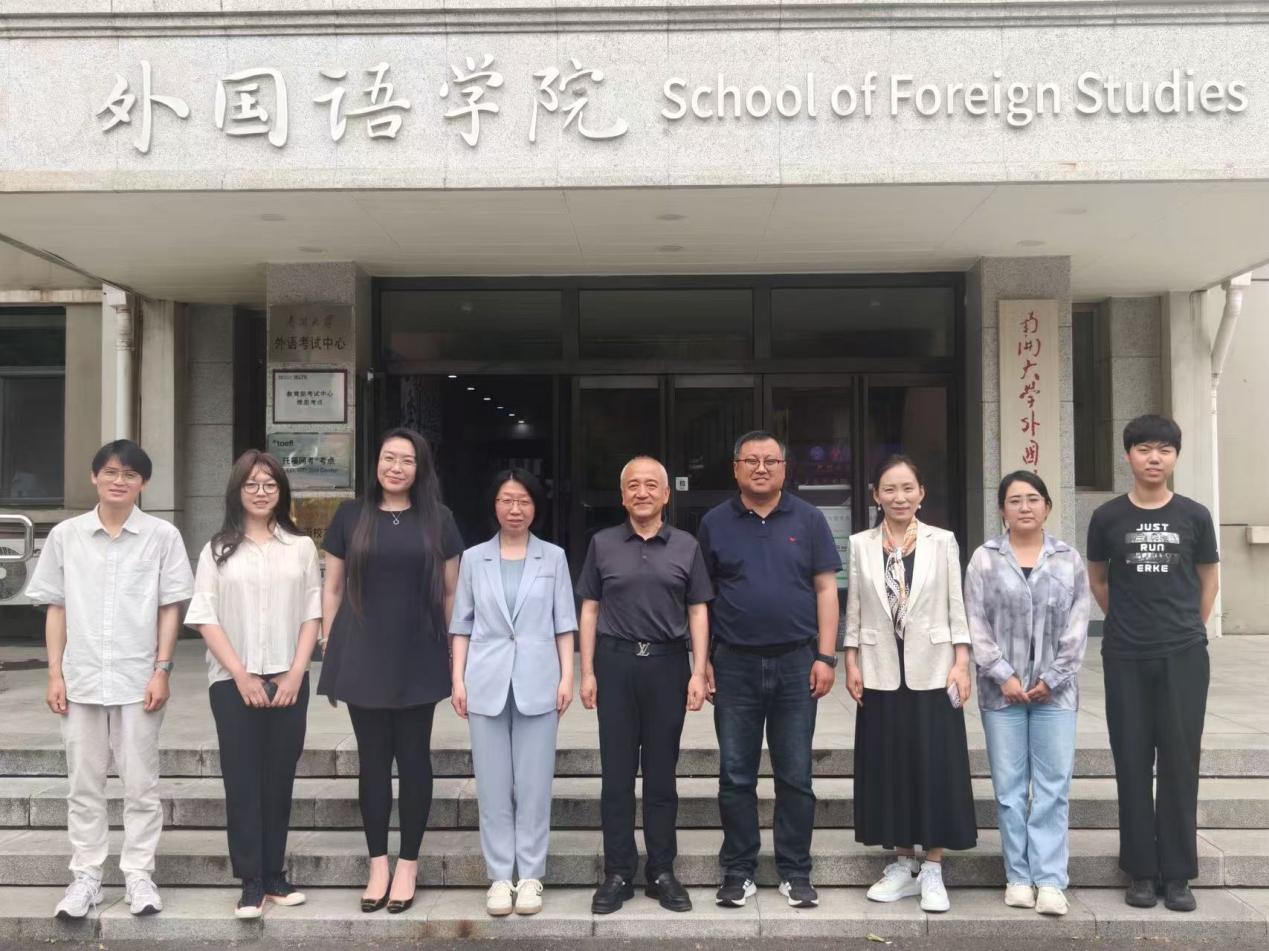
Recently, a five-member delegation led by Professor Hao Zhiming, Dean of Ledah International Arts College of Shijiazhuang University, visited the School of Foreign Studies (SFS) at Nankai University for an exchange and research visit. The visit was attended by Professor Li Min, Vice Dean of the SFS; Professor Yang Lin, Director of the Department of Italian; Ni Yang, a faculty member; and Liu Yule, an undergraduate who enrolled in 2023.
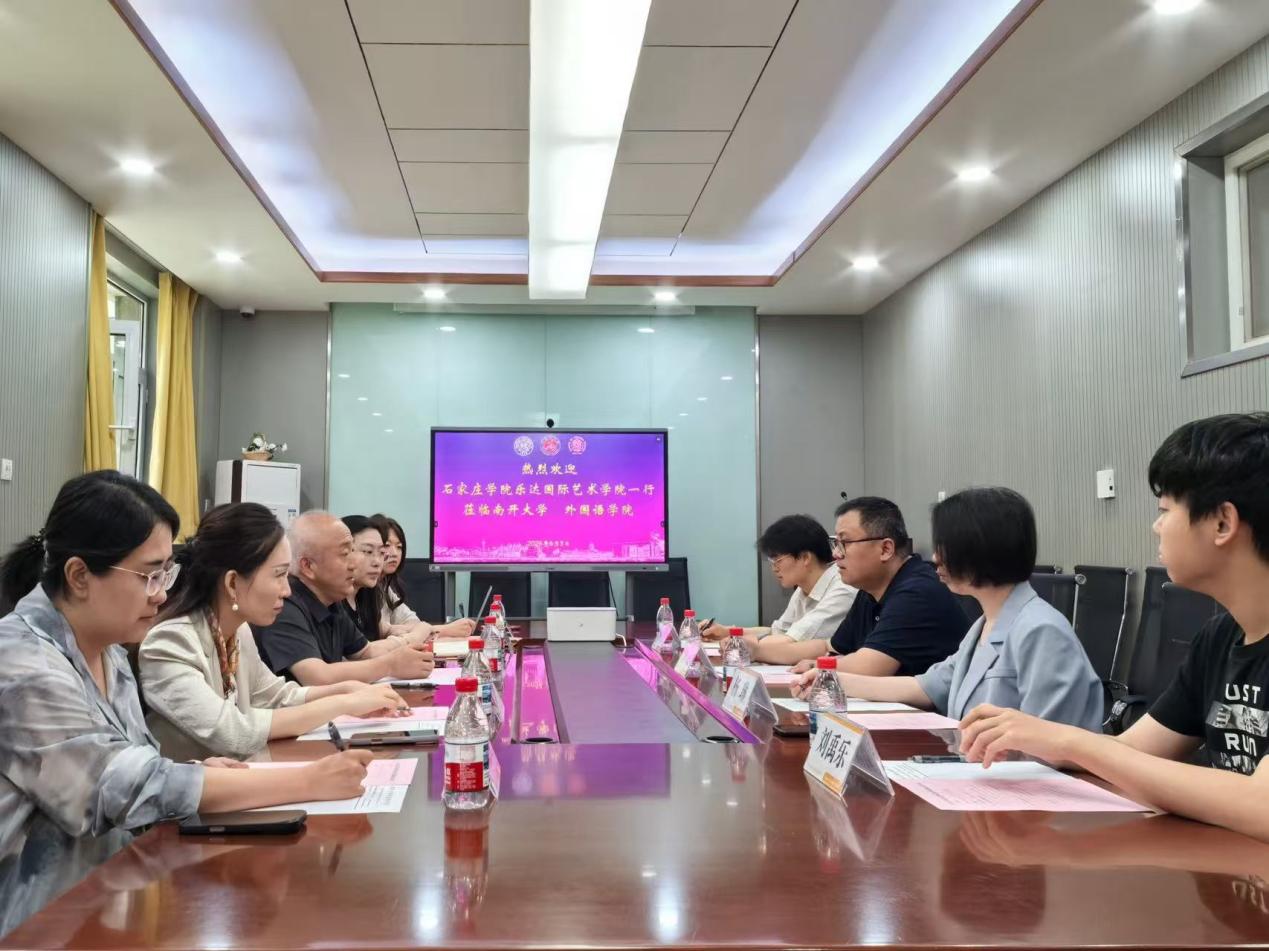
During the meeting, Professor Li warmly welcomed Professor Hao and his delegation and provided a detailed overview of the SFS’s educational characteristics, development strengths, talent cultivation system, and achievements in disciplinary development. He noted that the SFS has long adhered to its educational philosophy of cultivating students with “foreign language proficiency, humanistic literacy, scientific knowledge, an international perspective, a commitment to China, and the distinctive Nankai tradition.” The SFS has accumulated extensive experience in program development, faculty development, and international education, and remains committed to cultivating foreign language professionals with a systematic and solid command of foreign languages, strong professional skills, and outstanding intercultural competence. Professor Yang then introduced the Department of Italian’s faculty, program development, and student training outcomes.
Professor Hao gave a focused presentation on the educational philosophy, progress, and achievements of the cooperative program between Shijiazhuang University and the Conservatorio di Musica di Padova (Padua Conservatory of Music) in Italy. The two sides held in-depth discussions and shared their experiences on key topics, including the effective allocation of foreign faculty resources, the use of artificial intelligence to enhance Italian language teaching, and the translation and international dissemination of Chinese art songs.
Looking ahead, the two institutions will continue to deepen communication and collaboration, learn from each other’s strengths, and explore models for the joint development and sharing of course resources. These efforts aim to support the high-quality development of foreign language programs and promote two-way cultural exchange between China and other countries.