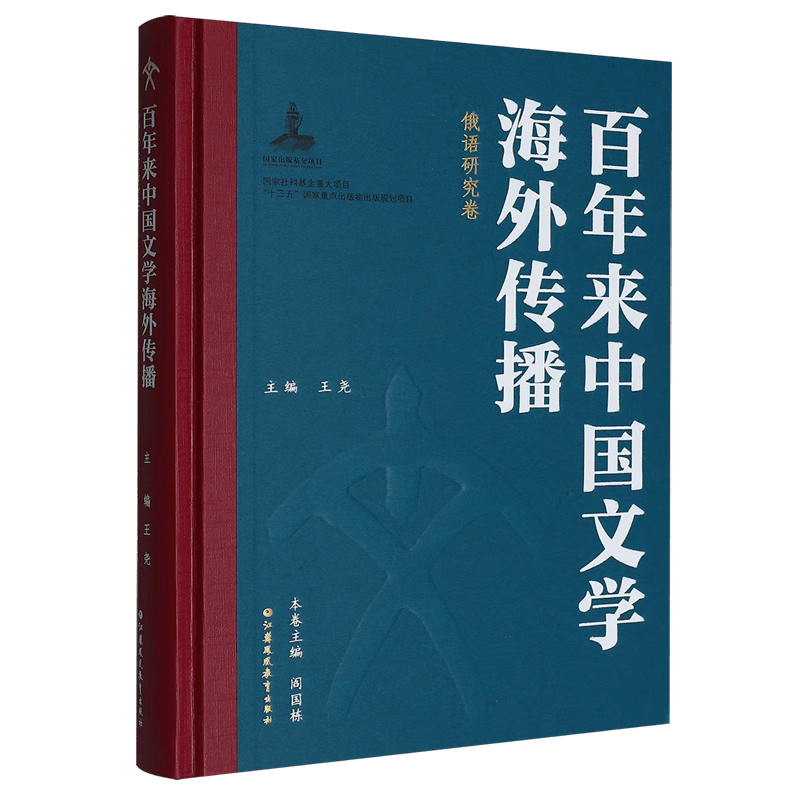
A Century of the Overseas Dissemination of Chinese Literature: Russian Studies, edited by Prof. Yan Guodong of the School of Foreign Studies (SFS) at Nankai University, was published by Jiangsu Phoenix Education Publishing. As one of the major outcomes of the major project “A Study of the Overseas Dissemination of Chinese Literature over the Past Century” funded by the National Social Science Fund of China (NSSFC), the book provides a systematic examination of the translation, scholarship, and reception of Chinese literature in Russia since the 20th century. Drawing on extensive documentary materials and a broad intercultural perspective, it presents a historical account of the ways in which Chinese literature entered Russia’s intellectual, literary, and broader social and cultural spheres, providing an important reference for understanding the overseas dissemination of Chinese literature and concluding the experience of literary exchanges between China and Russia.Taking the translation, scholarship, and reception of Chinese literature in Russia since the 20th century as its primary focus, the book systematically examines more than a century of the dissemination of Chinese literature in Russia by collecting Russian translations of Chinese literary works, literary histories, academic papers, newspaper and periodical reviews, and other relevant documentary sources. It traces the historical trajectory, distinctive stages, and mechanisms of this dissemination. Comprising seven chapters, the book examines not only the translation and publication of Chinese literary works in different periods, but also their interpretation, evaluation, and reception among Russian academics, literary circles, and general readers.
Structurally, the book takes literary genres as its primary organizing framework and examines the dissemination in Russia of Chinese classical poetry, classical fiction, classical drama, as well as modern and contemporary fiction and poetry. The section on classical poetry focuses on how Russian Sinologists and translators have approached the linguistic forms, systems of imagery, historical allusions, and aesthetic spirit of Chinese poetry. The section on classical fiction traces the Russian translations, prefaces and postscripts, reviews, and research on representative works, presenting the process through which Chinese fiction gradually entered Russian literary reading and Sinological scholarship. The section on classical drama concentrates on the issues of cultural interpretation and artistic transformation encountered in the dissemination of Chinese opera texts, performance conventions, and stage arts in Russia.
With regard to modern and contemporary Chinese literature, the book examines its dissemination against the backdrop of social changes in China and the development of Sino-Russian relations throughout the 20th century. By analyzing the translation and publication of works by Chinese writers in Russia during different periods, it reveals how the political environment, cultural policies, literary trends, and publishing systems influenced the selection of works, approaches to translation and dissemination, and standards of evaluation. The translation and reception of modern and contemporary fiction, in particular, have often been closely connected with Russian readers’ understanding of social changes in modern China. Meanwhile, the translation of modern and contemporary poetry more clearly reflects translators’ efforts to negotiate between fidelity to the original works and adaptation to the traditions of Russian poetry.
The book also pays particular attention to the historical stages of the dissemination of Chinese literature in Russia. In its early stages, dissemination relied primarily on the introductions provided by a small number of Sinologists, diplomats, and travelers. It subsequently developed into a more professional team of translation, publishing, and research. During the Soviet period, the translation and publication of Chinese literature were characterized by a high degree of organization and planning. Following the dissolution of the Soviet Union, academic research, commercial publishing, and non-governmental cultural exchanges became involved, resulting in increasingly diverse channels of dissemination and a wider range of literary works being introduced.
In addition, the book identifies translators, Sinologists, literary scholars, publishing institutions, and academic organizations as important agents in the overseas dissemination of Chinese literature. It examines the complete chain of dissemination, from original works to translated texts, from translated texts to critical reviews, and from individual reading to academic research, illustrating the processes through which Chinese literature has continually been selected, interpreted, and reexamined as it moves across linguistic and cultural boundaries.
Literature serves as an important window into the spiritual world of a country and its people. Over the past century, generations of translators and Sinologists have used the written word as a bridge, enabling Chinese literature to transcend linguistic and geographical boundaries and enter Russia’s academic sphere and broader social and cultural life. A Century of the Overseas Dissemination of Chinese Literature: Russian Studies not only provides a systematic review of the history of the dissemination of Chinese literature in Russia, but also offers academic support for further promoting Chinese literature globally and deepening people-to-people and cultural exchanges between China and Russia. The publication of the book also demonstrates the SFS’s longstanding academic strengths in Russian Sinology, the international communication of Chinese culture, and area studies, while representing another significant scholarly achievement through which the School continues to contribute to the development of China’s international communication capacity.