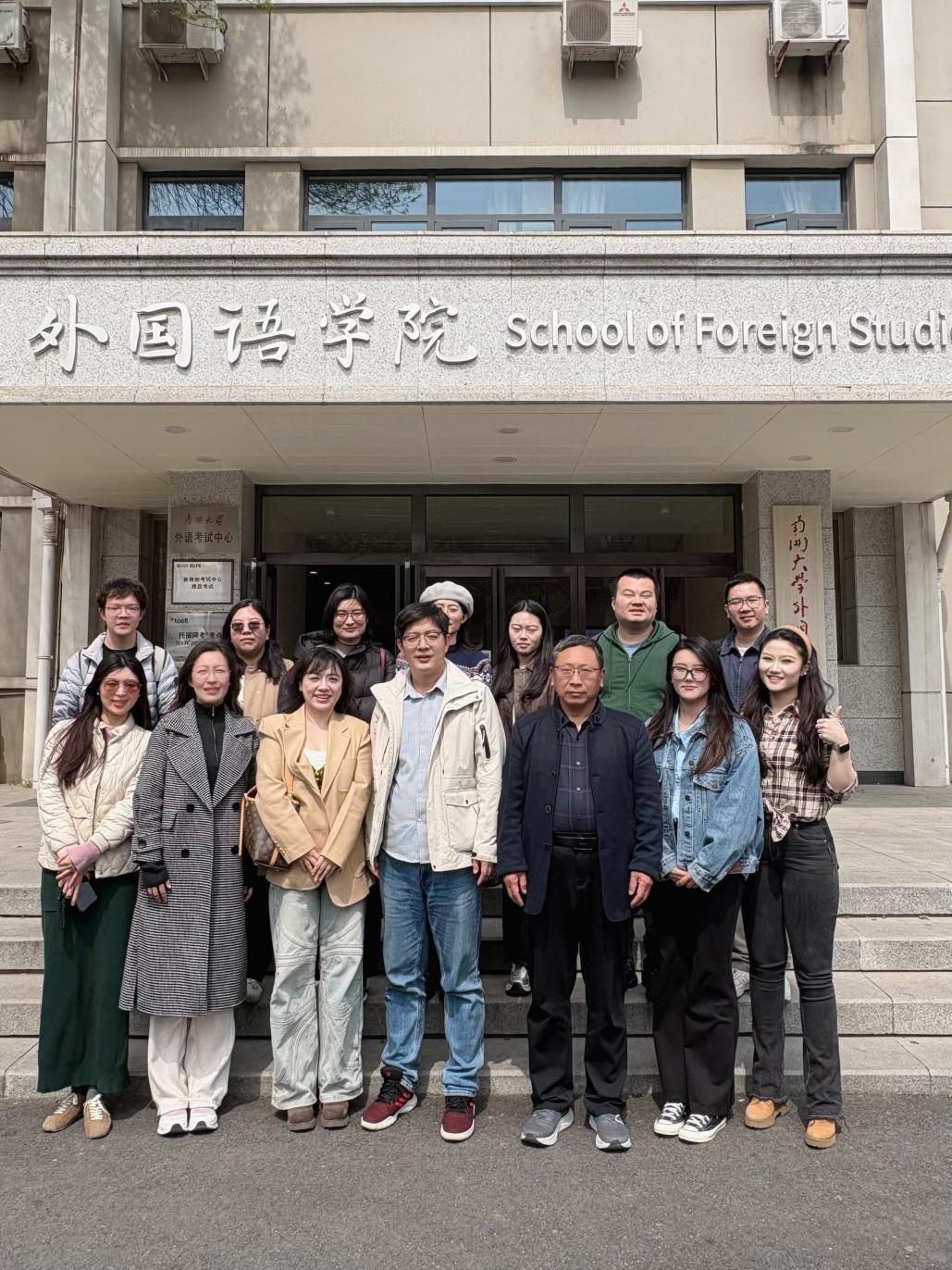
On the afternoon of April 3, 2026, a lecture titled “How Young Scholars Conduct Academic Research: Translation Studies as an Example” was successfully held in at the School of Foreign Studies (SFS), Nankai University in Tianjin. The lecture was organized by the Center for Globalization of Chinese Poetry of SFS. Professor Feng Quangong, Professor and Doctoral Supervisor at Zhejiang University, gave the lecture. Professor Zhang Zhizhong, Director of Center for Globalization of Chinese Poetry, presided over the event. Many faculty members and students attended the lecture.
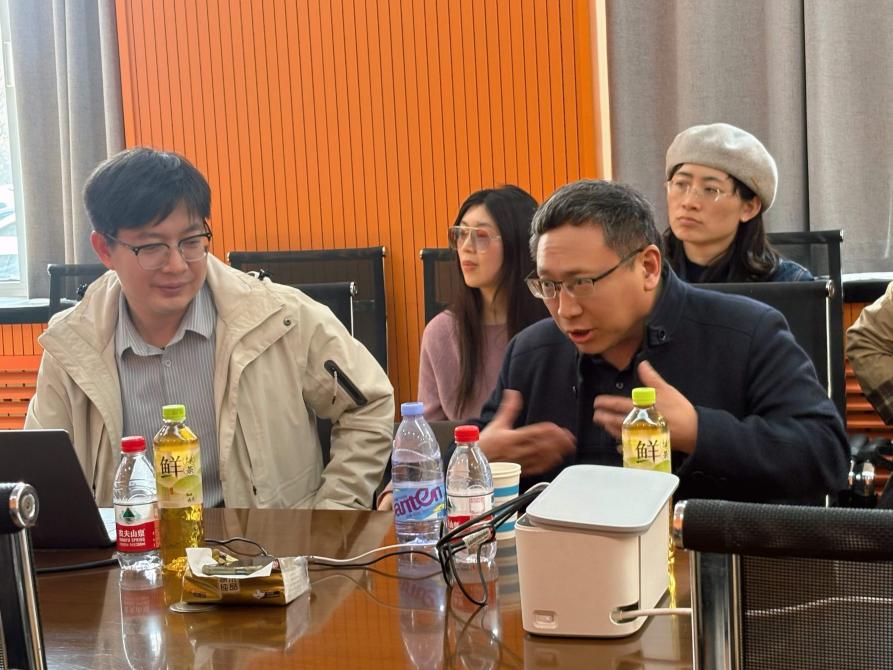
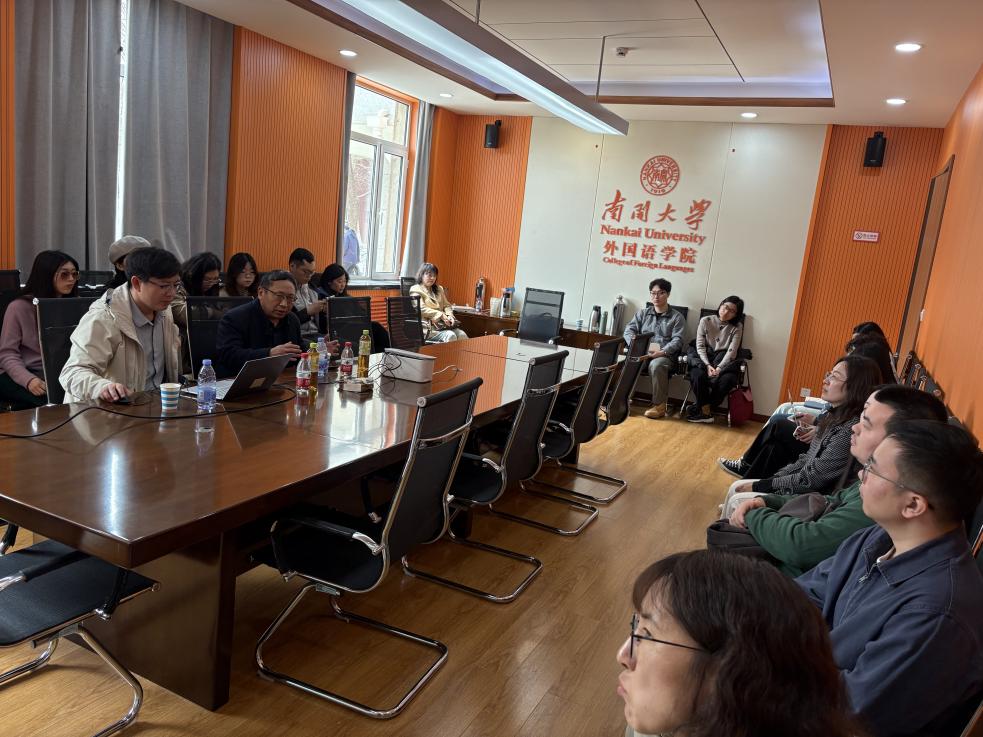
During the lecture, Professor Feng shared his research experience and discussed how to conduct translation studies from eight aspects: problem awareness and critical awareness, close reading and theoretical reflection, international vision and local characteristics, academic hotspots and self-adherence, teaching practice and academic research, interdisciplinary dialogue and resource transplantation, reading and writing for publication, and theoretical innovation and academic profile. Based on these eight aspects, Professor Feng emphasized that young scholars should be good at asking questions and maintaining independent thinking. He also noted that young scholars should engage in close reading and closely integrate macro-level theoretical research with micro-level textual analysis. In addition, Professor Feng pointed out that young scholars should fully explore domestic translation resources, provide modern interpretations of Chinese literary theory and translation theory, conduct translation research while achieving theoretical innovation, and reflect in writing to achieve originality.
In the Q&A session, faculty and students exchanged ideas with Professor Feng on the development of translation studies and the difficulties in translation research of non-universal languages. The atmosphere was lively and enthusiastic. Participants stated that the lecture clarified their research thinking, provided more research methods, and stimulated their enthusiasm for scientific research.