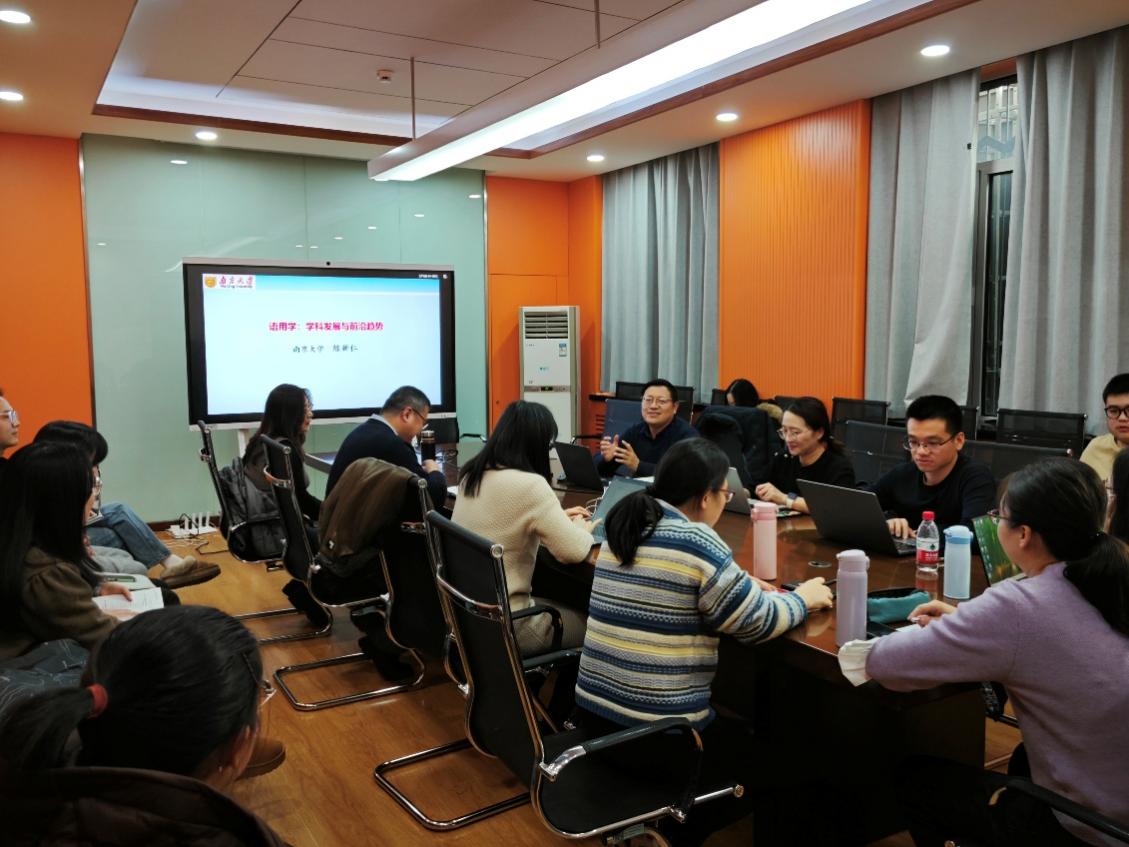
On the afternoon of December 17, 2025, Prof. Chen Xinren from the School of Foreign Studies of Nanjing University and Director of the Institute of Foreign Linguistics, was invited to the School of Foreign Studies (SFS) at Nankai University to deliver a lecture titled “Pragmatics: Disciplinary Development and Frontier Trends”. The lecture was chaired by Prof. Li Min, Associate Dean of the School, and attracted the participation of more than twenty faculty members and students from the Departments of English, Japanese, Russian, French, Spanish, and Italian, as well as the Department of Foreign Languages for Non-Majors.
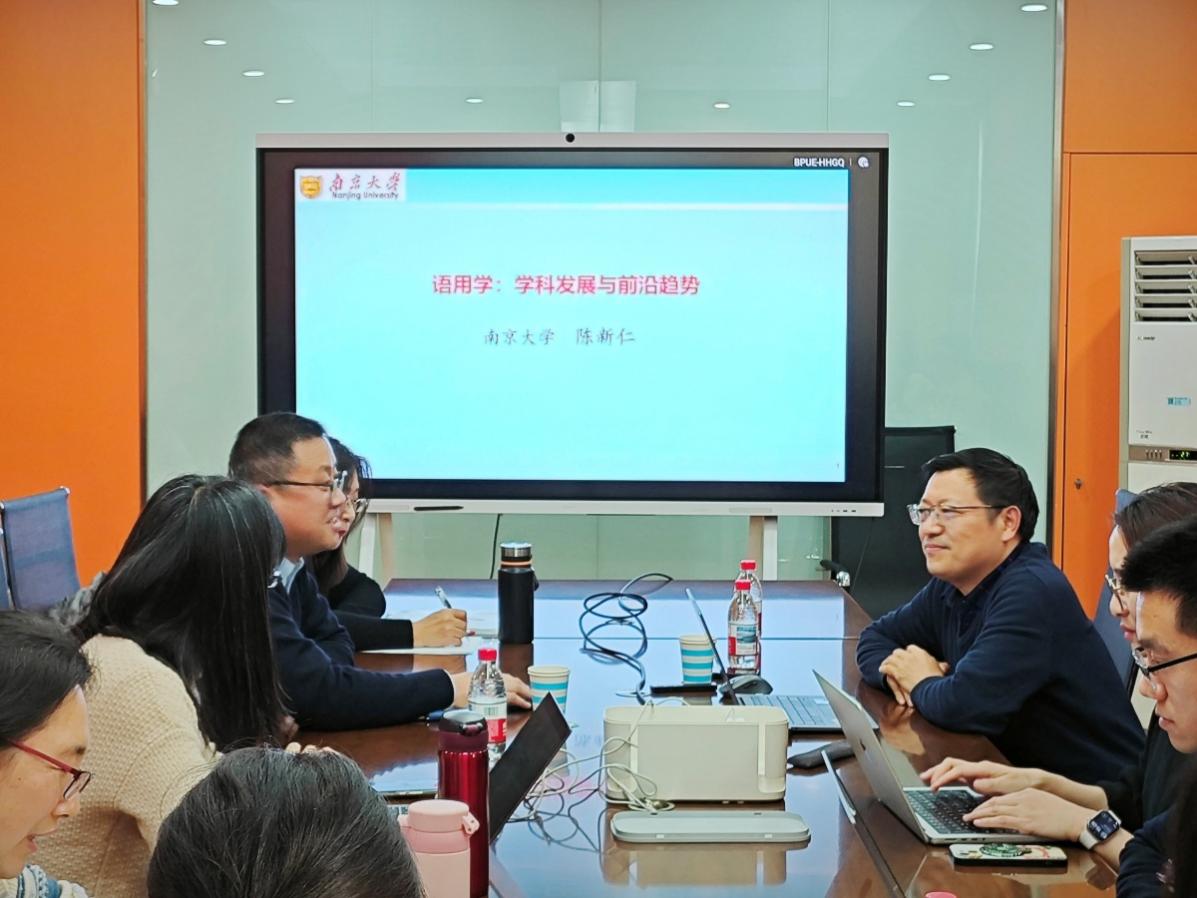
At the beginning of the lecture, Prof. Chen introduced the topic by raising questions such as “Is pragmatics outdated?” and “How is pragmatics developing in China?” He pointed out that pragmatics, as a classical discipline, continues to develop steadily in China and holds broad prospects for the future. Drawing on his monograph New Developments in Pragmatics and recent publications in the leading journal Journal of Pragmatics over the past five years, Prof. Chen provided a systematic overview of international research trends in pragmatics. He elaborated on new developments in pragmatic theory, emerging applications, and frontier directions in the field. In the concluding part, Prof. Chen outlined the developing way of pragmatics in China—from its initial introduction and theoretical elaboration, to theoretical application and reflection, and ultimately to current efforts in theoretical innovation, the construction of indigenous theoretical frameworks, and the expansion of applications. He emphasized that future research in Chinese pragmatics should lay greater emphasis on aligning with national strategies and responding to societal needs.
During the Q&A session, faculty members and students engaged in in-depth discussions with Prof. Chen on topics such as identity construction research, project applications in affective pragmatics, and the selection and publication of research topics in interface studies within pragmatics. The atmosphere was lively and engaging. Participants noted that the lecture combined theoretical depth with practical relevance, broadened their perspectives on pragmatics research, and provided valuable guidance for future studies.