On the afternoon of November 21, 2025, Prof. Xu Jiajin from Beijing Foreign Studies University was invited to the School of Foreign Studies (SFS) at Nankai University to deliver a lecture titled “Large Language Model Linguistics and Research Methods in Language Teaching” for faculty members and students.
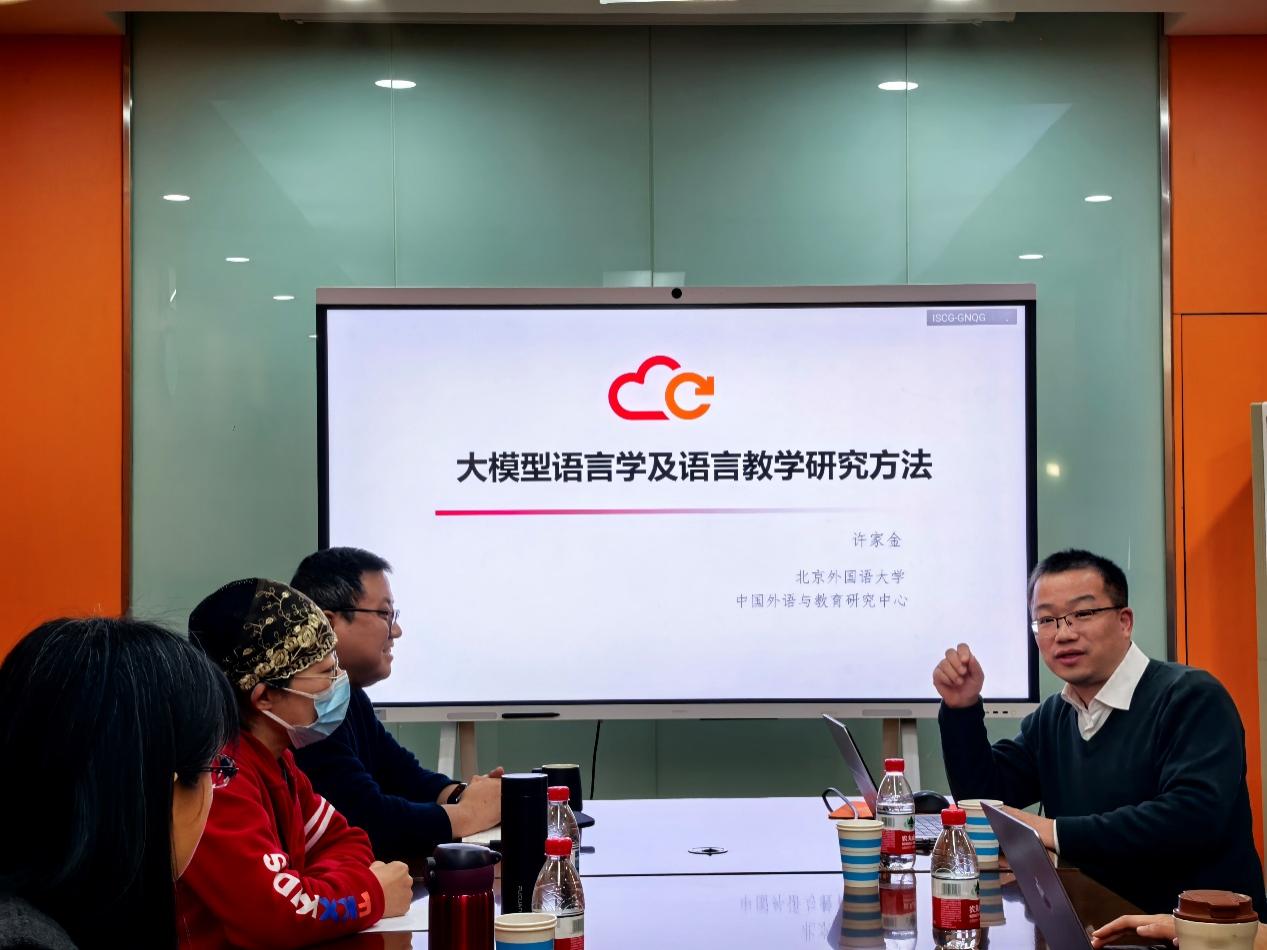
During the lecture, Prof. Xu first pointed out that, with the increasing integration of large language models into research and teaching, linguistic studies are transitioning from traditional corpus-based approaches to a “Corpus 2.0” stage. Human-machine collaborative linguistics, he noted, is expected to address issues that conventional methods struggle to cover and to achieve breakthroughs in research paradigms. He also emphasized that researchers should remain attentive to the core of the discipline and ensure that research methods are coherently integrated within the field.
In discussing applications in corpus linguistics, Prof. Xu illustrated the practical value of large language models in corpus-based pragmatic analysis through multiple examples. He stressed that research using large language models should not only focus on outcomes, but also ensure the reliability of research procedures and the reproducibility of methods. At the same time, such research should be grounded in relevant theoretical frameworks, using new findings to test and advance theoretical development. Prof. Xu further noted that, with the advancement of capabilities such as image recognition and video inference, large language models hold significant potential in multimodal research. They are expected to promote the expansion of linguistic studies into areas such as image analysis and emotion recognition.
During the lecture, Prof. Xu demonstrated the practical use, performance differences, and applicable scenarios of several mainstream large language models, and introduced methods for model tuning and optimization. He also showcased specific applications of large language models in research support, including digital humans, listening material generation, and image recognition, enabling faculty members and students to gain a more intuitive understanding of the operational features and usage strategies of different models in both research and teaching contexts.
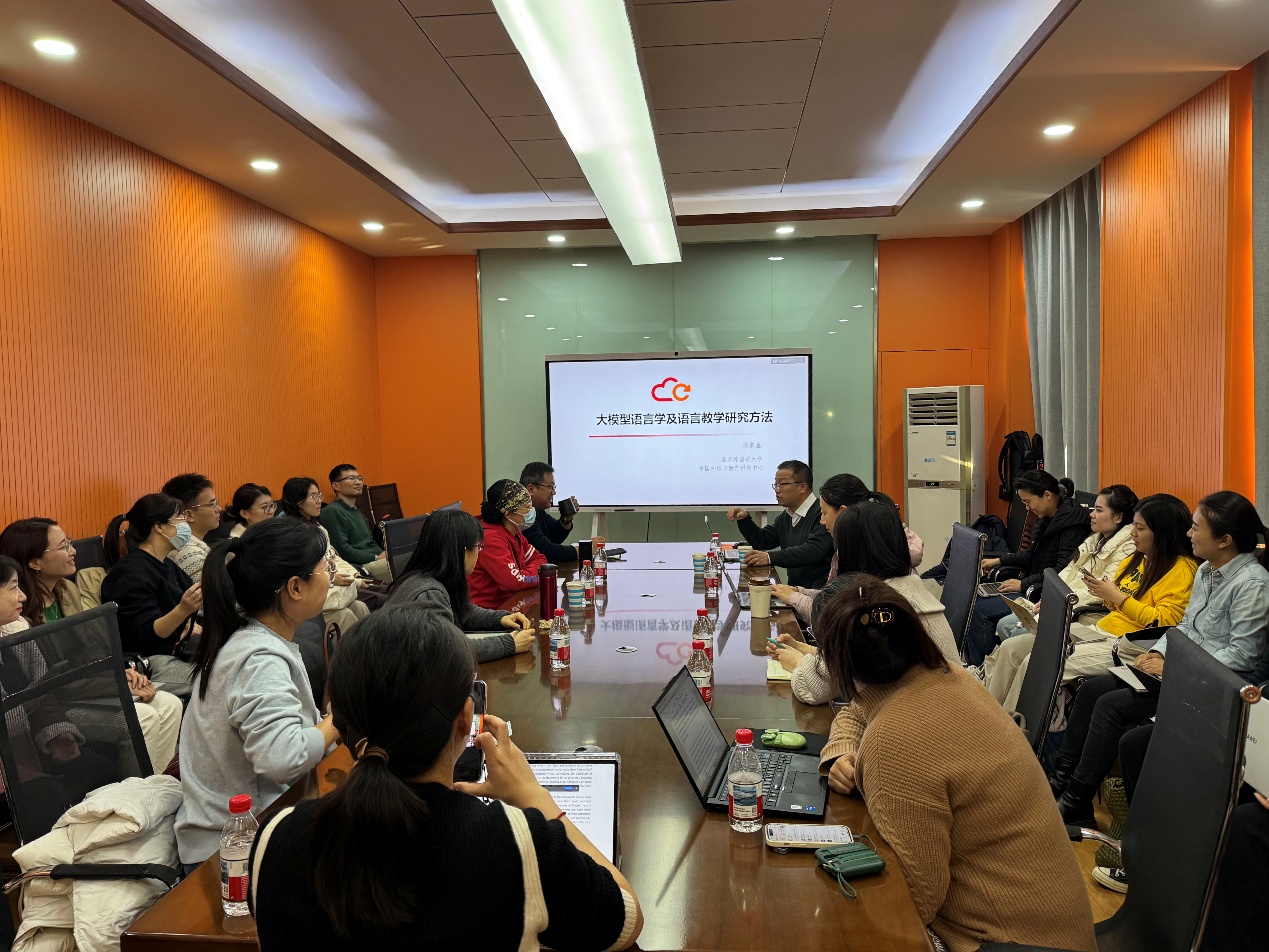
In the Q&A session, participants engaged in in-depth discussions with Prof. Xu on topics such as the methodological application of large language models in multi-modal research and their role in theoretical construction and disciplinary development. The atmosphere was lively and engaging. Faculty members and students expressed that the lecture had deepened their understanding of how large language models empower linguistic research, broadened their academic perspectives, and proved highly rewarding.