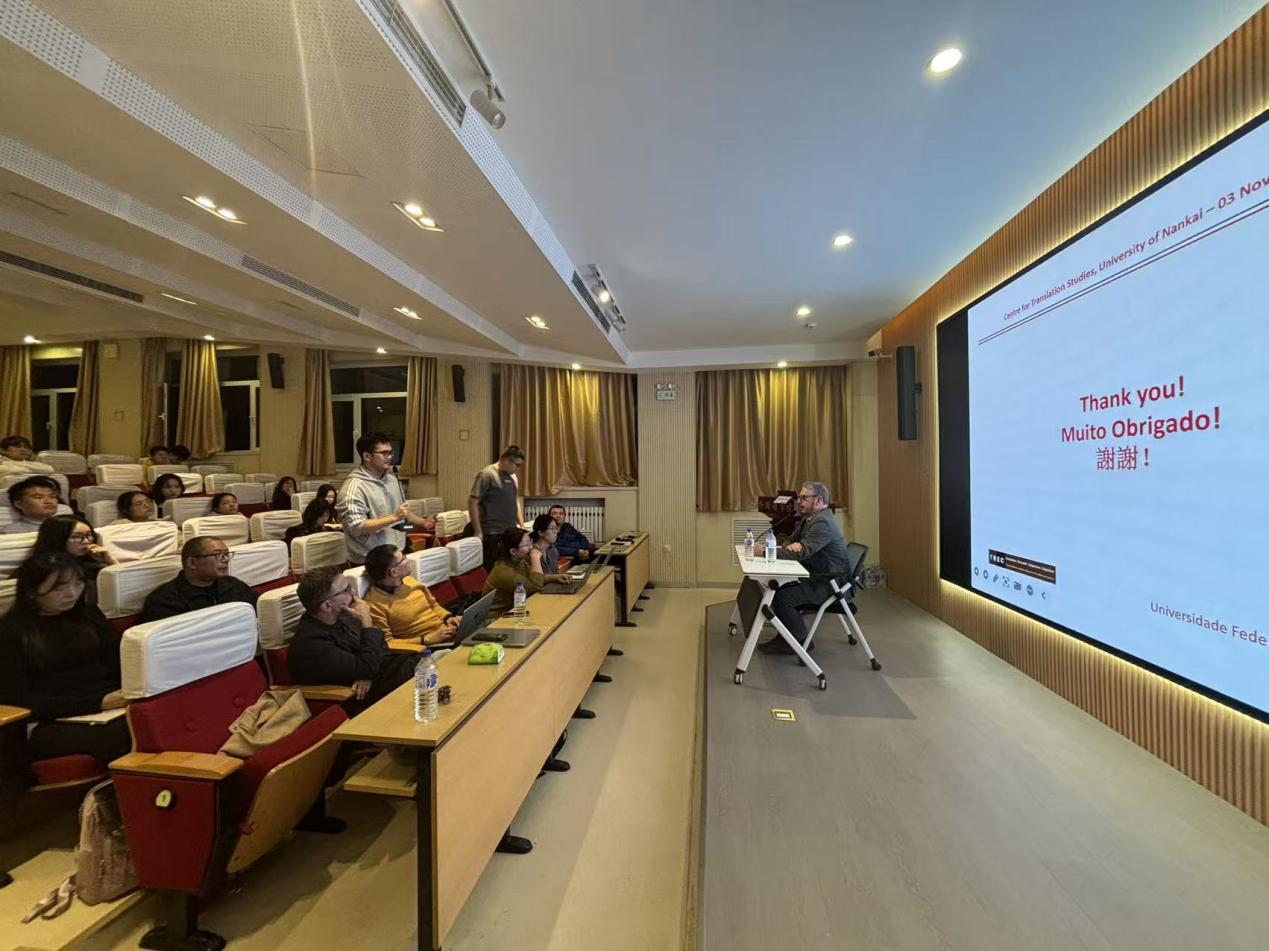
On the evening of November 3, 2025, Prof. Fabio Alves, Professor of Linguistics at the Federal University of Minas Gerais (UFMG), Brazil, and a distinguished scholar in cognitive translation studies, was invited to Nankai University to deliver an academic lecture titled “A Retrospective and Prospective Overview of Research on Translation as a Cognitive Activity” at Lecture Hall 111. The lecture was hosted by the Center for Translation Studies of the School of Foreign Studies (SFS) at Nankai University and chaired by Prof. Miao Ju, Director of the Center.The event attracted wide participation, including faculty members and students from the SFS, as well as postgraduate students from the Faculty of History and the School of Literature at Nankai University. Scholars and students from universities in Beijing, Civil Aviation University of China, and Tianjin Foreign Studies University also attended.
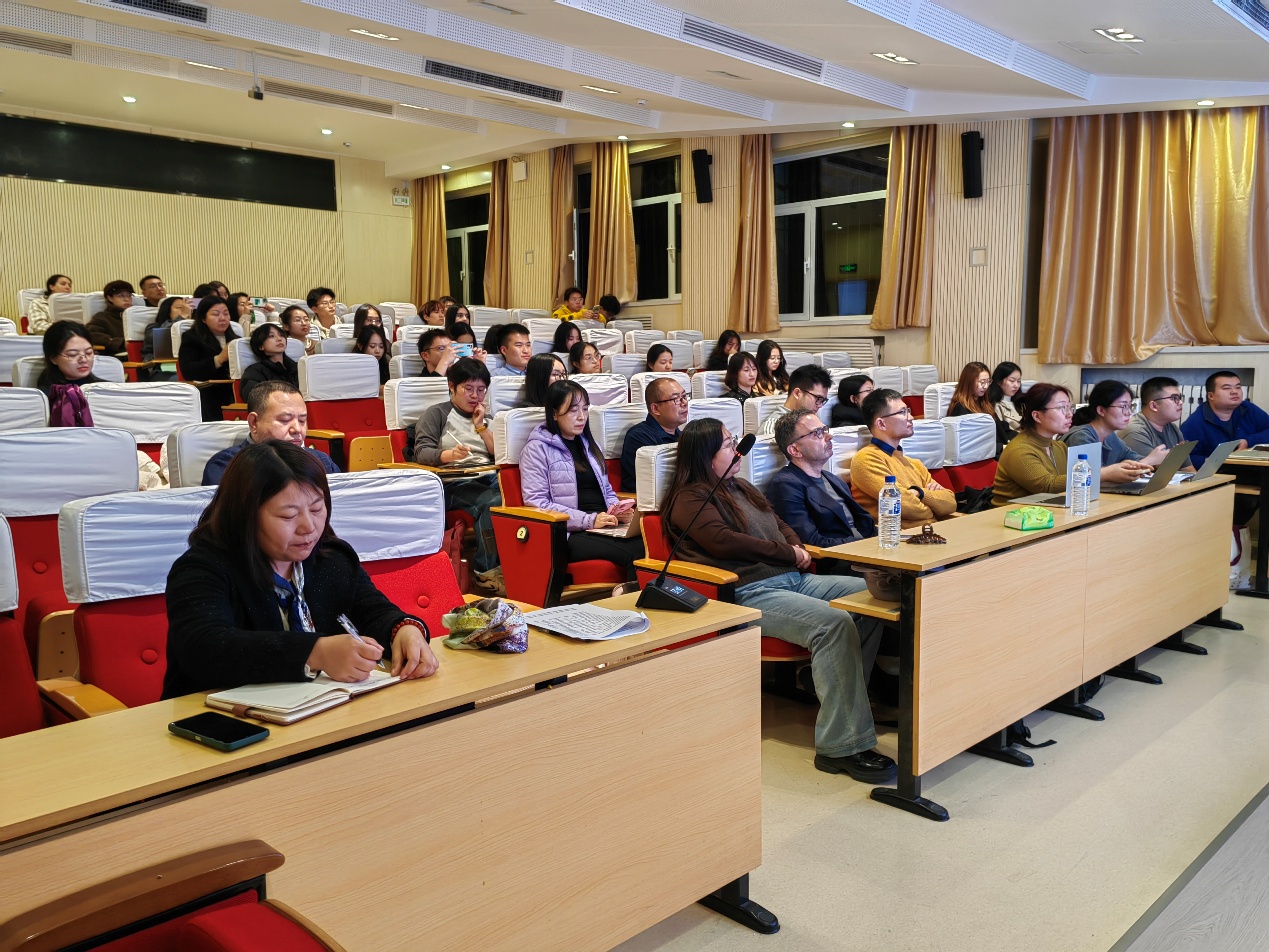
Prof. Alves holds prominent leadership and administrative positions in both research and education and has served as a visiting professor at multiple international institutions. His research focuses on cognitive processes in translation, expertise acquisition, human-machine interaction, and translator training. He advocates integrating methodologies from neuroscience, cognitive science, and psycholinguistics to develop a robust methodological framework for translation studies. His work contributes to establishing systematic theoretical and methodological tools for Cognitive Translation and Interpreting Studies (CTIS), while also addressing emerging challenges in human cognition and human-machine interaction in the context of rapid advancements in artificial intelligence.
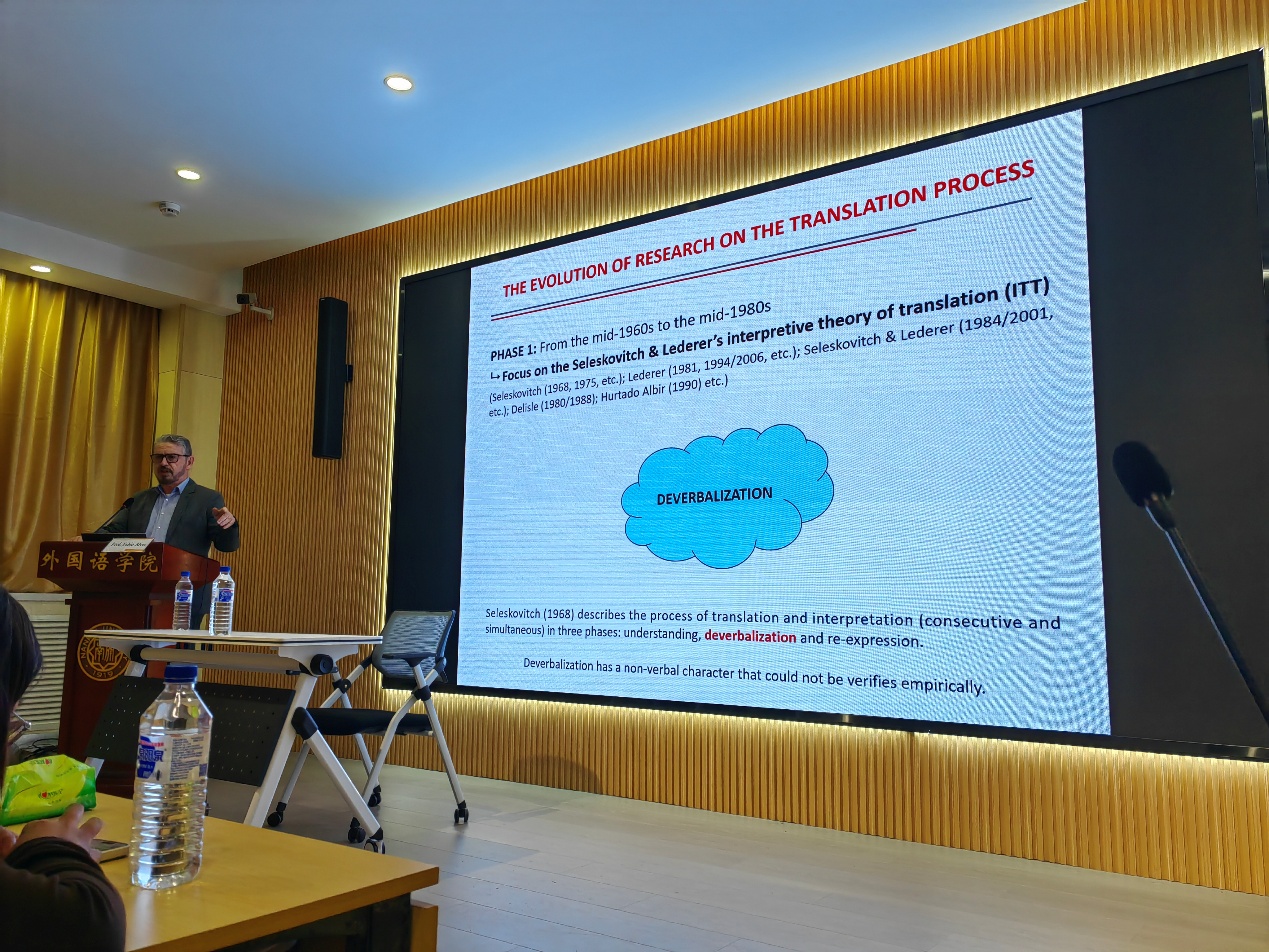
In his lecture, Prof. Alves traced the theoretical evolution of translation studies, particularly the development of empirical and experimental research on “translation as a cognitive activity.” He outlined five major stages: (1) early reliance on think-aloud protocols; (2) the introduction of triangulation paradigms; (3) the consolidation of multi-method approaches; (4) the integration of interdisciplinary methods and tools; and (5) the strengthening of interdisciplinary research with a focus on human-machine interaction. This trajectory reflects the transformation of translation studies from an experience-based field to an explanatory science. Translation, he emphasized, is not merely a linguistic transfer but a complex cognitive process involving attention allocation, problem-solving, and decision-making across multiple levels. Only by integrating insights from neuroscience, psycholinguistics, and cognitive science can scholars more comprehensively understand the underlying mechanisms of translation and provide stronger theoretical support for both research and practice.
Prof. Alves further extended the discussion to contemporary translation practices in the age of artificial intelligence. With the rapid development of AI and machine translation technologies, translators’ cognitive load and decision-making processes are undergoing significant changes. AI is not only reshaping translation workflows but also prompting a re-examination of the role of human translators and the boundaries of cognitive engagement. The integration of cognitive research and artificial intelligence, he noted, offers new theoretical opportunities and societal value for the field of translation studies.
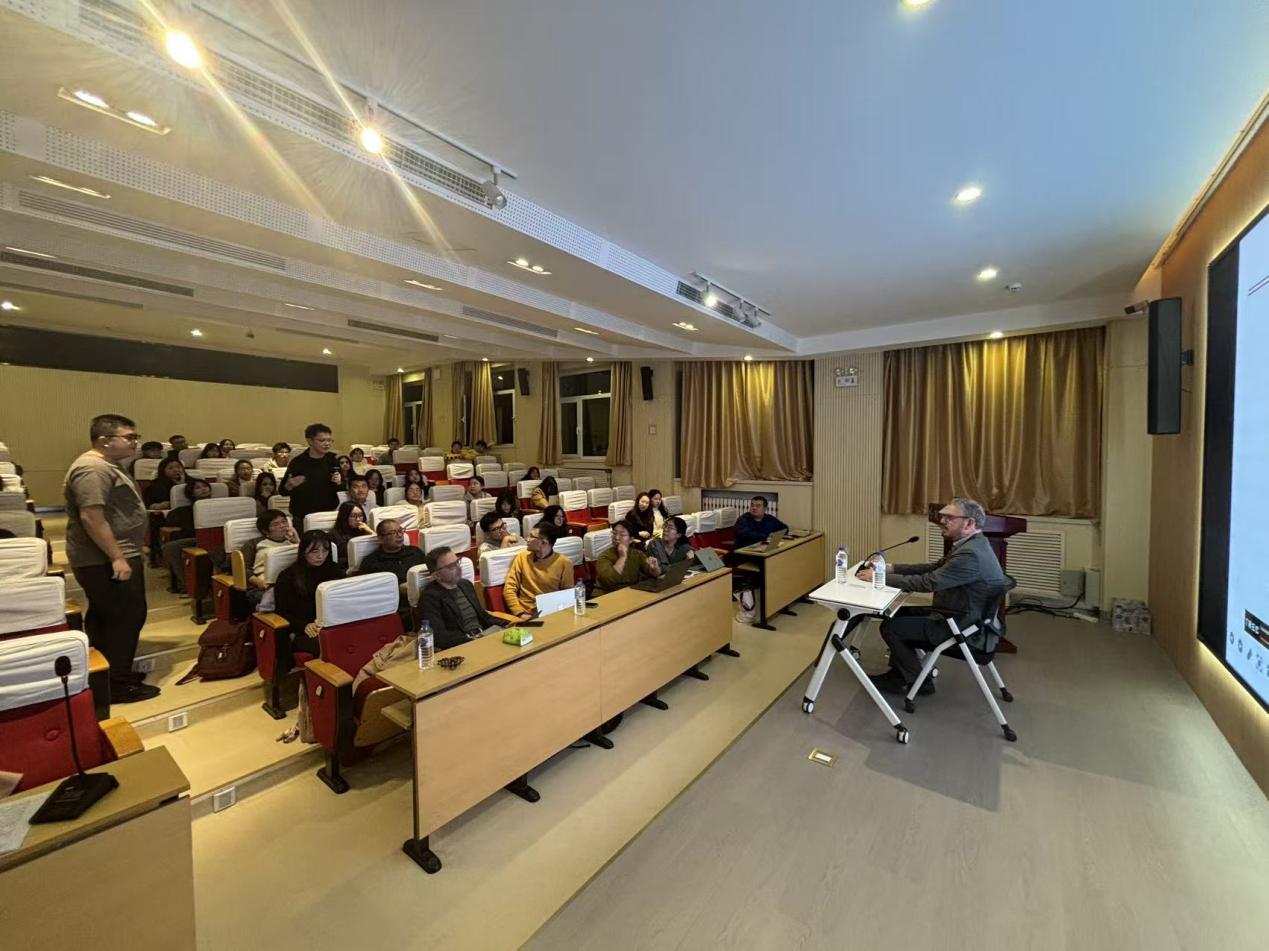
Prof. Miao Ju expressed sincere appreciation on behalf of the audience for Prof. Alves’s insightful and thought-provoking lecture. She noted that the lecture provided a clearer understanding of both the historical development and future directions of empirical and experimental research in translation studies. Furthermore, Prof. Miao emphasized that empirical research and process-oriented studies are closely interconnected, jointly reflecting the cognitive processes underlying both translation and interpreting. Their co-evolution marks a highly promising area within translation studies. She further pointed out that empirical research has significantly contributed to the development of methodological frameworks, which are essential signs of disciplinary maturity. The development of society in the 21st century and the application of various technologies, especially the widespread use of information and communication technologies and artificial intelligence, have brought about fundamental changes in contemporary translation practice, and have also provided richer experimental pathways, methodological foundations, and research domains for translation studies. We are able to apply various tools and instruments in the process of translation and interpreting practice, and obtain assistance and guidance from different technological software in research. Machine translation and artificial intelligence exert enormous influence, and the efficiency and accuracy of translation have been remarkably improved, thereby benefiting human cognitive efforts. With the support of digital networks and technological infrastructures, the working environment has become fundamentally different, and we are now confronted with the task of conducting interdisciplinary integration and methodological innovation in translation and interpreting practice within new working environments and under different cognitive activities.