On the afternoon of October 24th, 2025, Dr. Zhang Xiaochun, lecturer of The Center of Translation Studies (CenTras) of University College London (UCL), was invited to give an online academic lecture entitled “Rethinking Game Localisation and Accessibility: AI, Inclusive Design, and the Future of Play”.
Nowadays, with the rapid developments of research and application of information communication technology, the practice of social translation has undergone profound changes. Game localization is also one of the main businesses in the language service industry. Dr. Zhang Xiaochun combined practical description with theoretical innovation and opened up a research field from an interdisciplinary perspective, involving game localization and barrier-free communication, fan audio-visual translation, and humanistic application of language technology. She studied multilingualism, creative translation, cultural adaptation, entertainment interaction, barrier-free standards, and machine translation, and discussed the artificial intelligence technology enabling audio description/oral images. She put forward relevant knowledge and achievements, published more than 50 peer-reviewed papers in leading international academic journals, presided over a number of national and international cooperative scientific research projects, and obtained financial support from authoritative institutions such as the British Academy, Research England and the European Commission.
In the interactive session, the attending teachers had a heated discussion on the translation workflow of game localization, the application of AI in translation production and the technical realization of barrier-free design. Dr. Zhang Xiaochun gave a detailed response based on her own cooperation experience with international game companies. She pointed out that at present, the mainstream practice is still to rely on the computer-aided translation (CAT) platform to complete multilingual collaboration, and it has not yet achieved the scene that translators and game developers work together on the same automation platform. However, at present, plug-ins relying on AI translation function can meet the needs of developers for multilingual testing of games. She believes that with the maturity of localization technology system and the automation of production process, the industry will change from the traditional offline text translation mode to the platform-based real-time collaboration between translators and developers.
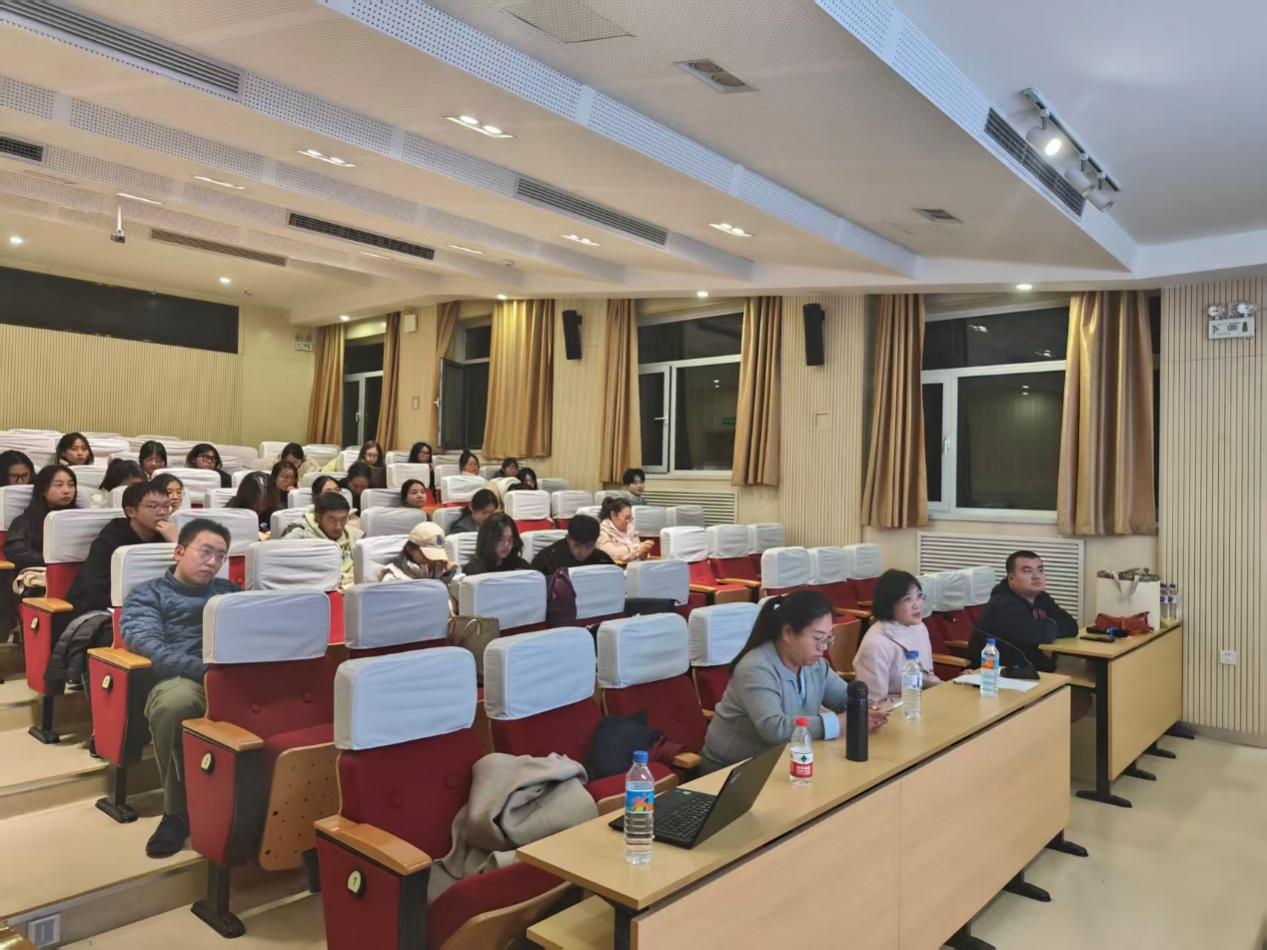
In the conclusion section, Professor Miao Ju pointed out that Zhang Xiaochun’s lecture brought frontier enlightenment to teachers and students at SFS with an international vision and cross-border thinking, and presented rich content and profound thinking, which seemed to open a wide window, through which we saw a panoramic view of industry practice, localization workflow and vocational skills. This lecture is specially arranged for the development needs of translation undergraduates and MTI master students in our college, which will inspire new teaching contents, methods and curriculum innovation.