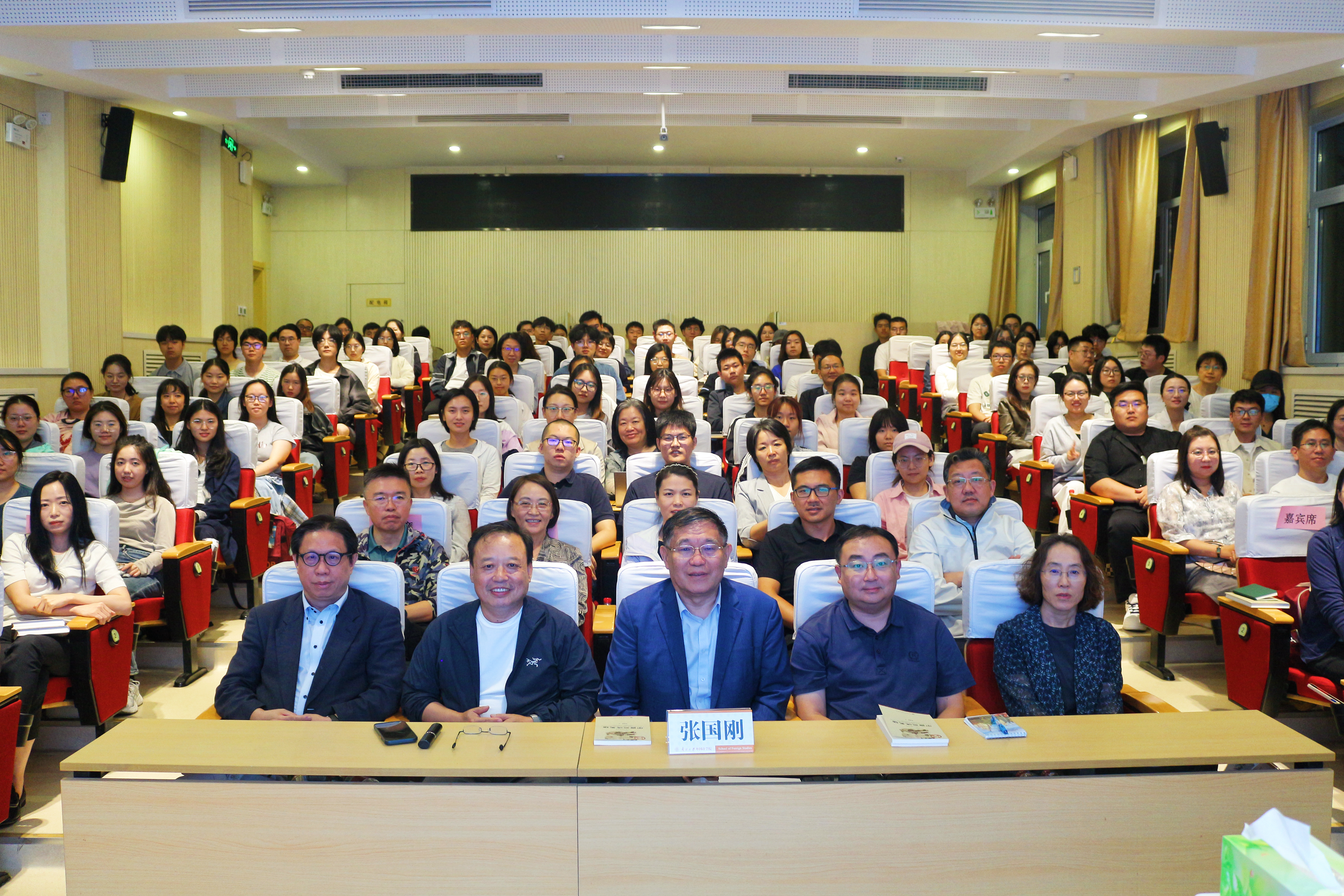
On September 19, Prof. Zhang Guogang, Senior Professor of Liberal Arts at Tsinghua University, Professor at the School of Humanities, and Changjiang Distinguished Professor appointed by the Ministry of Education, was invited to Nankai University to deliver a lecture titled “Comparative Perspectives on Chinese and Western Civilizations: Three Great Divergences.” The lecture was chaired by Prof. Yan Guodong, Dean of the School of Foreign Studies (SFS) at Nankai University and Director of the Center for Regional and Country Studies.
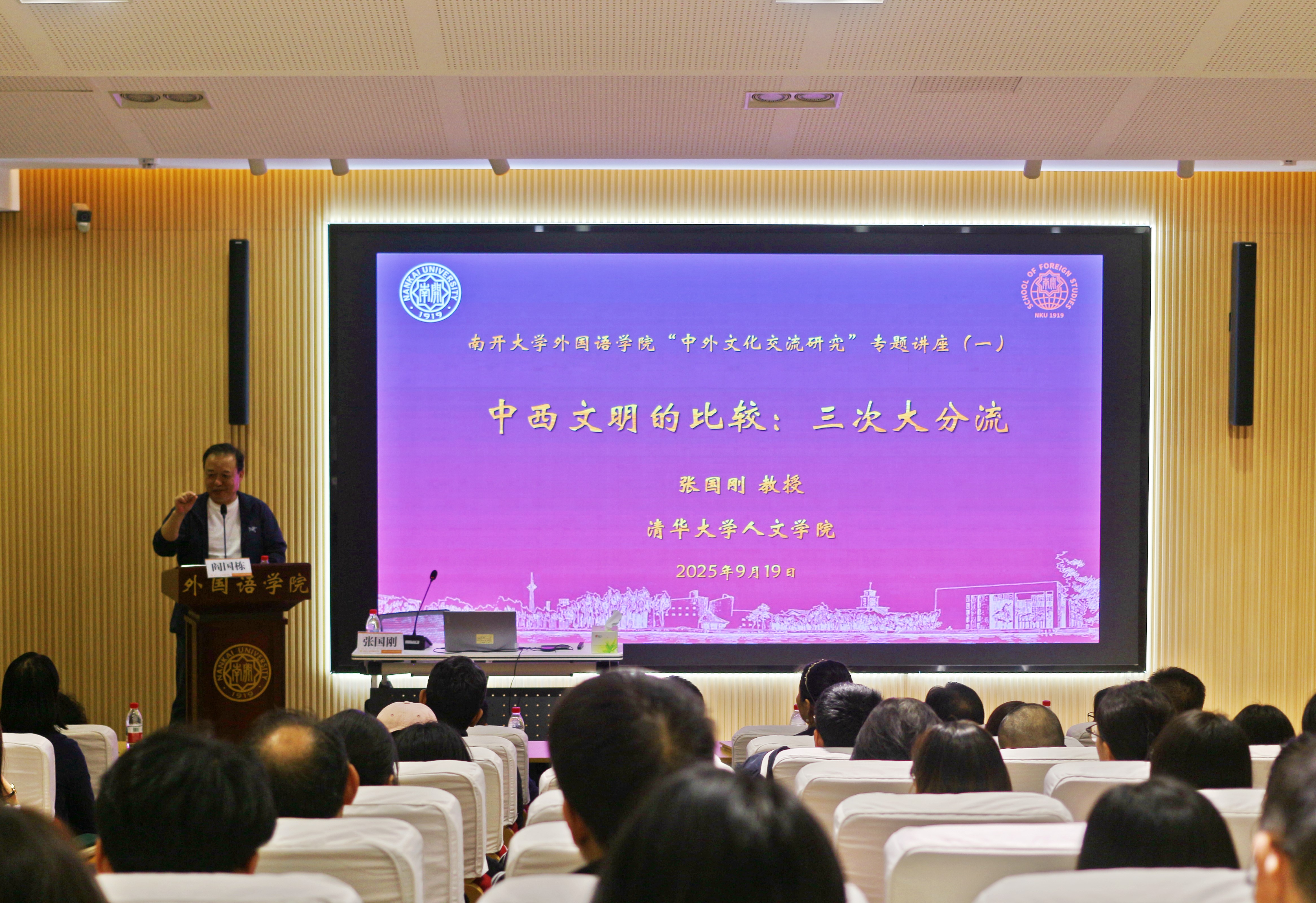
In his lecture, Prof. Zhang systematically outlined three major historical divergences between Chinese and Western civilizations across antiquity, the medieval period, and the modern era: “Antiquity: Indigenous Development and Migration,” “The Medieval Period: Integration and Competition,” and “The Modern Era: Tianxia (all-under-heaven) versus Wanguo (all Nation-states).”
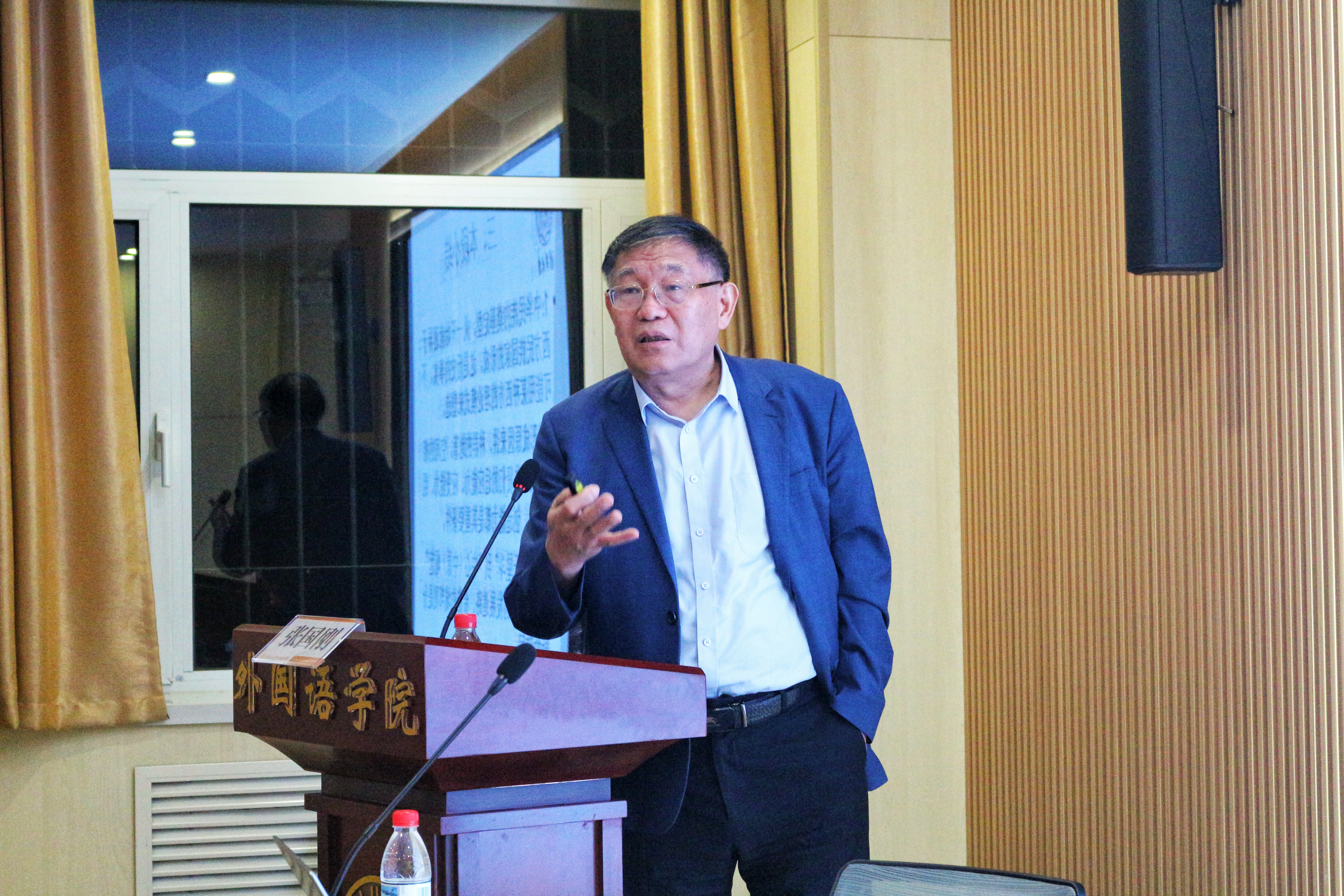
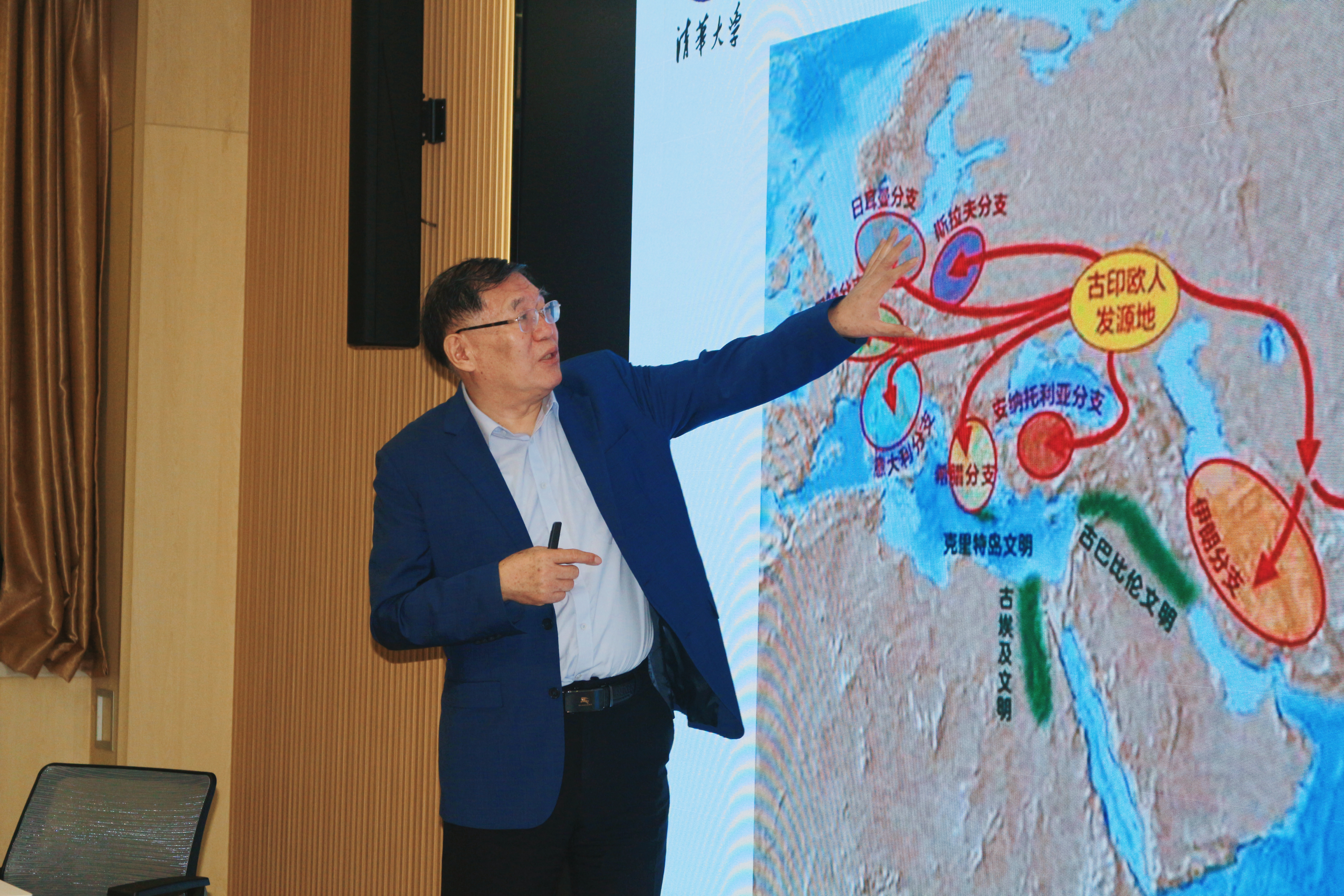
Prof. Zhang offered a comparative analysis of civilizational trajectories in these periods. In antiquity, Chinese civilization evolved from a “constellation of cultures” toward the rise of a central core in the Central Plains, while Western civilization, represented by ancient Greece, developed through dispersed migrant city-states. During the medieval period, the aftermath of the Qin-Han and Roman empires diverged sharply: Chinese civilization had already achieved a high degree of maturity by the Han Dynasty, and despite disruptions such as the upheavals of the Five Hu, its continuity remained intact; in contrast, post-Roman Europe lacked sustained political unification. In the modern era, China and the West followed distinct paths characterized respectively by a unified “all-under-heaven” order and a pluralistic system of nation-states. Prof. Zhang concluded by emphasizing that the unity of the Chinese nation emerged organically through history and represented an optimal collective choice across historical periods.
In his concluding remarks, Prof. Yan noted the lecture’s particular relevance for students of foreign languages, encouraging them to draw on their disciplinary strengths to present Chinese history to the world and to serve as ambassadors of mutual learning among civilizations. A lively Q&A session followed, during which Prof. Zhang engaged in in-depth discussion with students. After the lecture, Prof. Zhang took a group photo with faculty and students in attendance.