On the evening of May 19, 2025, from 7:30 to 9:30 p.m., the Center for Globalization of Chinese Poetry at the School of Foreign Studies (SFS) at Nankai University successfully held an online academic lecture titled “Mutual Learning Among Civilizations as the Fundamental Law of Human Development.” The lecture was delivered by Prof. Cao Shunqing, distinguished professor at Sichuan University and academician of the European Academy of Sciences and Arts, attracting participants from over one hundred universities across China and abroad.
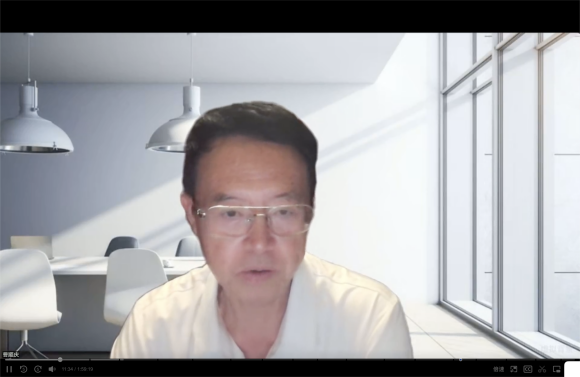
With profound academic insight and a cross-cultural perspective, Prof. Cao expounded on the essential role of mutual learning among civilizations in the development of human civilization. His lecture covered topics such as the limitations of Eurocentrism and the neglect of intercivilizational exchange, the connections between ancient Greek civilization and Eastern civilizations, the influence of Arab civilization on the Renaissance, the inspiration Eastern philosophy provided to the West, and the universality of scientific inquiry beyond Western boundaries. Prof. Cao critiqued the Eurocentric narrative of “universal values,” which selectively emphasizes Western achievements—such as ancient Greece, the Renaissance, and the Enlightenment—while downplaying the contributions of Eastern civilizations to world history. For instance, he noted that the Greek alphabet originated from the Phoenician script, which in turn was influenced by the cuneiform writing of Mesopotamia—an example demonstrating that the prosperity of civilizations depends on openness, inclusiveness, and mutual learning. He called for historical evidence to correct biases in Western superiority theories and advocated for a pluralistic and symbiotic view of global civilization.
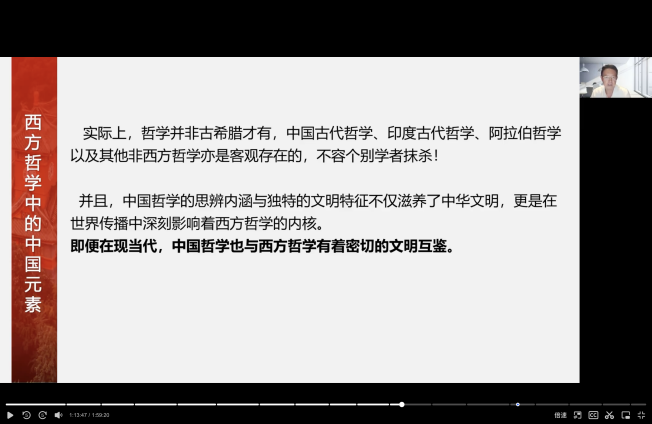
Prof. Zhang Zhizhong from the SFS at Nankai University concluded that Prof. Cao also linked his discussion to the current international context, emphasizing the contemporary significance of mutual learning among civilizations in fostering cross-cultural understanding and promoting human progress. Only by breaking cultural barriers and embracing equal dialogue among civilizations can we provide intellectual resources for global governance and harmonious development.
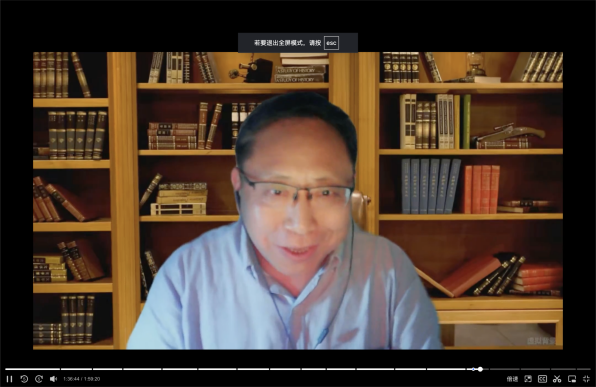
During the exchange session, Prof. Cao shared his passion for scholarship and his belief in the importance of maintaining a positive mindset. He encouraged young scholars and students to cultivate genuine enthusiasm for academic inquiry, as the pursuit of knowledge brings both fulfillment and happiness. The lecture, which drew participation from over a hundred students from universities worldwide, was both intellectually rigorous and practically inspiring, sparking lively discussion among attendees.